
Why Listening Can Feel Difficult
Regular Indonesian listening practice is an important part of learning the language. You may already know many words when you see them on a screen. However, those same words can suddenly become difficult to recognise when someone speaks.
This problem is completely normal for beginners. Spoken language moves quickly, so your brain has less time to think. In addition, pronunciation and natural speech may sound different from the Indonesian you see in a textbook. Therefore, listening needs its own practice. SpeakIndo combines audio with vocabulary, video, reading, exercises, and speaking activities. As a result, beginners can develop their listening skills while following a clear learning path.
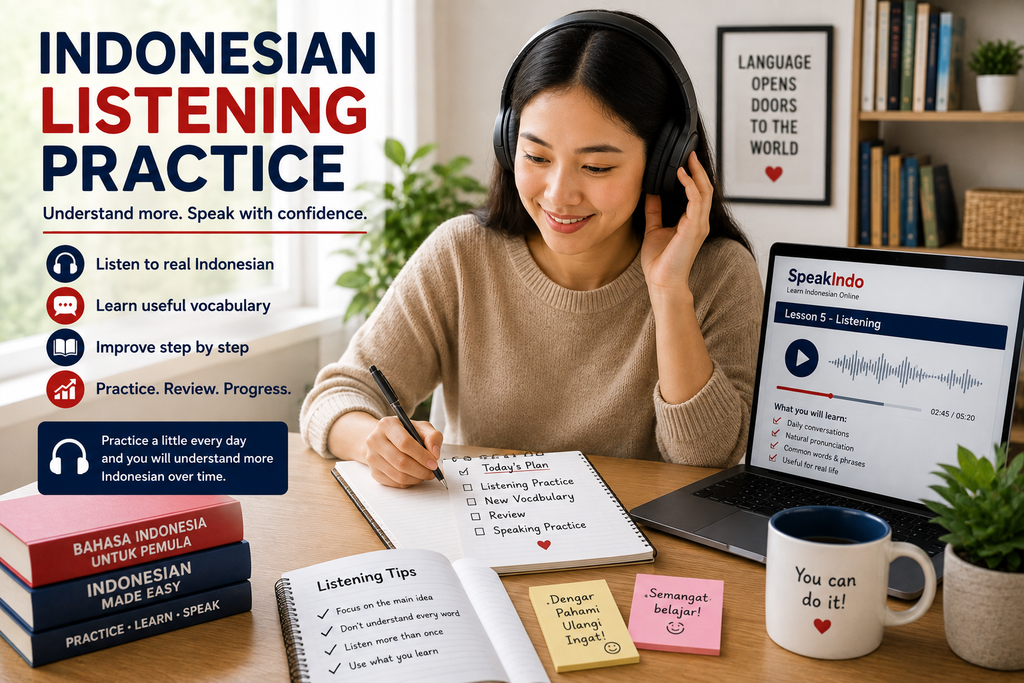
Why Reading Alone Is Not Enough
Reading gives you time.
You can stop at an unfamiliar word, think about its meaning, and continue when you are ready. However, a real conversation does not work that way.
People keep talking.
Therefore, learners who spend all their time reading may understand written Indonesian but struggle during conversations.
Listening regularly helps solve this problem.
At first, you may only recognise a few words. However, those words become easier to hear after regular practice.
Over time, you begin to notice more.
Don’t Try to Understand Every Word
One of the biggest beginner mistakes is trying to translate everything.
You hear a sentence and immediately try to understand every single word. Meanwhile, the speaker has already moved on to the next sentence.
As a result, you quickly lose track of the conversation.
Instead, listen for the main idea.
First, notice words you already know. Next, think about the situation. After that, try to understand the general message.
You do not need 100% understanding.
In fact, learning to continue listening when you miss a word is an important skill.
Start with Easy Indonesian Audio
Beginners should not start with the most difficult listening material.
For example, a fast television debate may contain unfamiliar vocabulary and natural speech that is too advanced.
Instead, choose audio made for learners.
Good beginner material should have:
- Clear pronunciation
- Familiar vocabulary
- Short sections
- Everyday topics
- A suitable speaking speed
- Opportunities for repetition
Once easier material becomes comfortable, you can slowly move toward more natural Indonesian.
Therefore, difficulty should increase step by step.
Listen More Than Once
You do not have to understand an audio recording after one attempt.
In fact, repetition is useful.
During the first listen, focus only on the general topic. Next, listen again and notice familiar vocabulary.
On the third attempt, pay attention to details you missed earlier.
Each repetition has a different goal.
Therefore, listening to one useful recording several times can sometimes teach you more than constantly choosing new material.
Use Short Practice Sessions
Listening practice does not need to take an hour.
Ten or fifteen minutes can already be useful.
For example, listen to Indonesian during breakfast or during a break. Later, return to the same audio for another short session.
Short practice is easier to include in your daily routine.
More importantly, regular contact with Indonesian helps your ears become familiar with the language.
Therefore, consistency matters more than one long weekly session.
Combine Listening with Other Skills
Listening should not stand alone.
For example, vocabulary study helps you recognise more words in audio. Meanwhile, reading can show you how those words appear in context.
Speaking is useful too.
When you repeat language aloud, you pay closer attention to pronunciation and sound. As a result, familiar speech may become easier to recognise later.
A balanced learning plan should therefore connect:
- Vocabulary
- Listening
- Reading
- Speaking
- Review
Each skill supports the others.
Why Real Indonesian Can Sound Faster
Beginner learning materials often use clear speech.
However, everyday conversations may sound much faster.
People naturally connect sounds, use common expressions, and speak without long pauses. Therefore, the language can feel very different outside your lessons.
Do not let this discourage you.
Your ears need time to adjust.
Start with clear audio first. Afterwards, add short pieces of natural Indonesian. You may understand very little in the beginning.
However, regular exposure makes natural speech less unfamiliar.

Make Listening Part of Your Routine
You will improve faster when Indonesian becomes part of your week.
A simple routine could include:
- Beginner audio
- Course videos
- Short listening activities
- Vocabulary review
- Speaking practice
- Weekly repetition
There is no need to complete every activity each day.
Instead, spread them across your week.
For example, focus on listening today and review vocabulary tomorrow. Later, combine both skills.
This keeps your routine varied while still giving you regular practice.
How SpeakIndo Helps with Listening
Searching online can give you plenty of Indonesian audio.
However, random material does not always match your current level.
A beginner may find something interesting but discover that most of the vocabulary is too difficult.
SpeakIndo provides a clearer learning path.
The program combines:
- Video lessons
- Indonesian audio
- Useful vocabulary
- Reading activities
- Speaking practice
- Exercises
- Quizzes
- Flexible online access
New language appears within a structured course instead of random topics.
Therefore, listening practice connects with material you are already learning.
This makes it easier to recognise vocabulary and understand the context.
Don’t Worry About Slow Progress
Listening often takes time to improve.
You may study for several weeks and still feel that native speakers talk too quickly.
However, progress is not always easy to notice.
One day, you may suddenly recognise a word that used to sound unclear. Later, you understand the topic of a short conversation without translating it.
These small changes matter.
Therefore, measure progress over months rather than days.
Regular practice will give your ears more time to become familiar with Indonesian.
Continue Learning Indonesian
Your Indonesian listening practice becomes even more useful when it is connected to other language skills.
These articles go well with this one:
- Study Indonesian Online
- Indonesian Language for Beginners
- How to Learn Indonesian
- Basic Indonesian Words
- Indonesian Conversation for Beginners
- Learn Indonesian for Travel
For example, beginners can first read Indonesian Language for Beginners and then continue here to focus specifically on listening.
Afterwards, Indonesian Conversation for Beginners can help them connect listening with speaking.
For official Indonesian spelling and word meanings, learners can also use KBBI, the official Indonesian dictionary.

Improve Your Indonesian Listening Today
Understanding spoken Indonesian will not happen overnight.
However, you can improve step by step.
Start with clear audio. Listen more than once, focus on the main message, and review useful vocabulary. Most importantly, practise regularly.
SpeakIndo gives beginners a structured way to combine Indonesian listening practice with video lessons, vocabulary, reading, speaking, exercises, and quizzes.
Instead of searching for random listening material every day, you can follow a clear learning path at your own pace.
Visit SpeakIndo and discover the Indonesian program for beginners.
Start learning today and train your ears to understand more Indonesian with every lesson.
Finally, know someone who is learning Indonesian too? Share SpeakIndo with them. You can listen to the same material, compare what you understood, and motivate each other to keep practising.